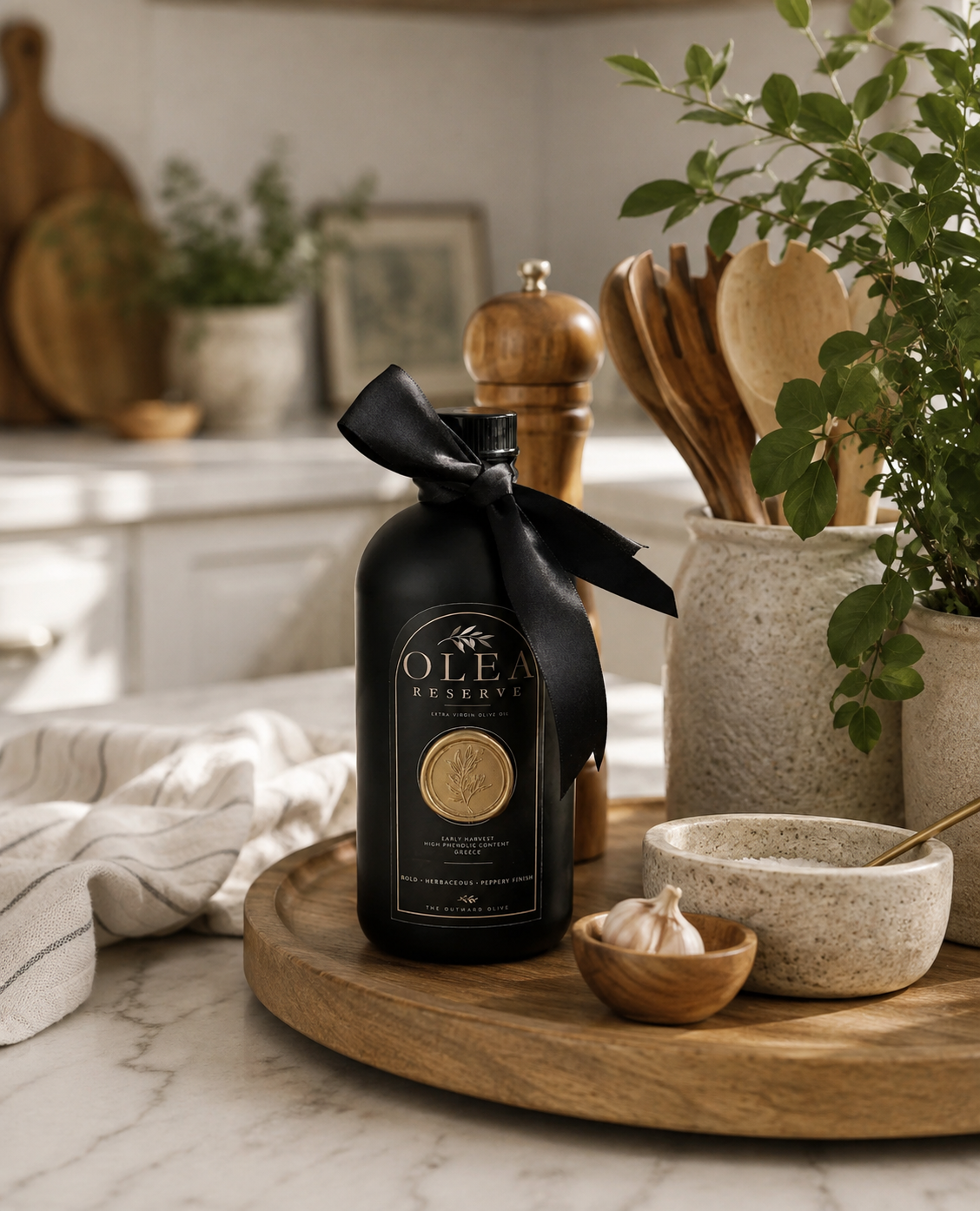
High-Phenolic Extra Virgin Olive Oil & Wellness: The Science Behind Olea Reserve
What Makes a High-Phenolic Extra Virgin Olive Oil Different?
Not all extra virgin olive oils are created equal. The difference between a standard olive oil and a high-phenolic one comes down to timing, terroir, and one chemical reality: polyphenols degrade fast.
Polyphenols are naturally occurring compounds in olives that act as antioxidants. They give early-harvest oils their distinctive grassy, peppery finish and, more importantly, they're the compounds most linked to olive oil's wellness properties in scientific literature. The problem? The longer an olive sits on the tree, the fewer polyphenols it contains. The moment olives are harvested, oxidation begins.
High-phenolic extra virgin olive oils are typically harvested in the first 2-3 weeks of harvest season, when olives are still turning color. This early window preserves maximum polyphenol content. It's not about being trendy. It's about timing.
The Wellness Connection: What Research Shows
Over the past 15 years, large-scale studies like the PREDIMED trial (Mediterranean Diet study) have linked high-quality extra virgin olive oil consumption to cardiovascular benefits, better blood sugar regulation, and improved cognitive function. The mechanism? Those polyphenols.
Polyphenols and Heart Health
Polyphenols in early-harvest extra virgin olive oils support:
- Arterial function: Research suggests these compounds help maintain healthy blood flow and vascular flexibility.
- Inflammation response: Polyphenols work as natural anti-inflammatory agents, supporting the body's ability to manage everyday stress.
- Cholesterol profiles: Studies indicate that polyphenol-rich olive oils help maintain healthy HDL and LDL ratios.
Antioxidant Support
The Mediterranean diet's wellness reputation isn't just about olive oil, but olive oil plays a starring role. A single tablespoon of high-phenolic extra virgin olive oil can deliver more antioxidant power than a serving of raw spinach. That's not marketing. That's measurable polyphenol content.
Blood Sugar Stability
Early research suggests that meals finished with polyphenol-rich olive oils may support more stable blood sugar response, which has ripple effects for sustained energy and overall metabolic health.
Why Origin and Harvest Method Matter
Not every olive oil region produces high-phenolic oils. Certain terroirs, specific olive varieties, and early-harvest practices create conditions where polyphenols thrive.
Kalamata, Greece has been a center of olive oil production for thousands of years. Olive cultivation there runs deeper than recorded history. The climate, soil mineral content, and altitude of the region create naturally high-polyphenol olives. Olea Reserve comes from a fifth-generation family farm in that landscape, where those olives are hand-picked early and cold-pressed within hours, preserving polyphenol content from tree to bottle.
Early harvest is labor-intensive. There's no way around it. You're picking greener olives before machines can do the work efficiently. But that's exactly why it matters: the result is an oil that tastes alive (grassy, peppery, sometimes vegetal) and delivers measurable wellness compounds.
Cold-pressing (or "milling") means no heat is applied during extraction. Heat speeds up the pressing process but also breaks down polyphenols. True cold-pressed extra virgin olive oils are extracted at temperatures below 27°C. This is why the process takes longer and costs more.
Olea Reserve: High-Phenolic Made Intentional
Olea Reserve is a single-estate, early-harvest extra virgin olive oil from a five-generation family farm in Kalamata. The harvest happens in the first weeks of the season. Olives are hand-picked and milled together within the same day, preserving maximum polyphenol content.
This isn't a blended oil sourced from multiple regions. It's one story, one terroir, one family's rhythm with their trees. The result tastes different: grassy, bright, with a distinct peppery finish that's actually a sign of polyphenol-rich oil hitting the back of your throat.
How to Use Olea Reserve for Wellness
High-phenolic oils are not cooking oils. Heat destroys the polyphenols you're seeking. Instead:
- Finish soups and roasted vegetables: A drizzle just before serving captures the full wellness benefit.
- Dress raw greens: A simple vinaigrette becomes a polyphenol delivery system.
- Dip bread: Pair with your morning toast or evening aperitivo.
- Spoon over hummus or dips: Add texture, flavor, and wellness compounds to existing meals.
A single tablespoon (about 15ml) daily is enough to gather the benefits that research has documented. It's not about volume. It's about consistency and quality.
The Wellness Rhythm, Not a Cure
Here's what matters to say clearly: extra virgin olive oil, even high-phenolic olive oil, is not a supplement and not a cure for anything. It's a food. It's part of a pattern. The Mediterranean diet works because it's a whole way of eating and living, where quality olive oil is a daily rhythm, not an afterthought.
If you're managing a health condition or taking medications, the polyphenol content of your olive oil should be one conversation with your doctor, not the whole one.
That said, if you're already eating well and moving your body, swapping a lower-quality oil for a high-phenolic one is a meaningful shift in your polyphenol intake. It's gathering well.
How to Identify High-Phenolic Olive Oils
Looking to try a high-phenolic oil? Here's what to look for:
- Single-estate or single-origin: Multiple sourcing means inconsistent polyphenol content. Look for bottles that tell you where the olives came from.
- Early harvest date: The label should indicate harvest in September or early October (in the Northern Hemisphere). If there's no date, ask the seller.
- Cold-pressed or "cold-extracted": You want pure, early-harvest, minimally processed oil.
- Taste test: High-phenolic oils taste grassy, peppery, sometimes almost astringent. If it tastes buttery and smooth, it's likely not high-phenolic.
- Color and clarity: Dark green to golden. Cloudiness in the bottle isn't a problem (it's sediment). Murky darkness might indicate oxidation.
Bringing It Home
The reason we focus on Olea Reserve at The Outward Olive is this: a pantry staple can also be an experience. The same bottle that elevates your Tuesday night dinner can be a gift that says you care about the recipient's wellness rhythm. That's the whole point of gathering well.
High-phenolic extra virgin olive oil isn't luxury. It's intention. It's choosing an oil based on how it's made, where it comes from, and what it delivers. And it's the kind of choice that, repeated daily, becomes a quiet part of how you take care of yourself and the people you gather around your table.
Olea Reserve is available for individual tasting and purchase at our Crown Point tasting room, or online for direct shipment. Every bottle comes with tasting notes and suggestions for how to make the most of it.
Gather well. Gift beautifully.
Sources
Estruch, R., et al. (2013). “Primary Prevention of Cardiovascular Disease with a Mediterranean Diet.” The New England Journal of Medicine, 368(14), 1279–1290. https://doi.org/10.1056/NEJMoa1200303• Large-scale PREDIMED trial demonstrating cardiovascular benefits of Mediterranean diet including olive oil consumption.Schwingshackl, L., & Hoffmann, G. (2014). “Monounsaturated Fatty Acids, Olive Oil and Health Status: A Systematic Review and Meta-Analysis of Cohort Studies.” Lipids in Health and Disease, 13(1), 154. https://doi.org/10.1186/1476-511X-13-154• Meta-analysis on cardiovascular and metabolic effects of olive oil polyphenols.Covas, M. I., et al. (2006). “The Effect of Polyphenols in Olive Oil on Heart Disease Risk Factors.” Annals of Internal Medicine, 145(5), 333–341. https://doi.org/10.7326/0003-4819-145-5-200609050-00006• Clinical evidence on polyphenol-rich olive oil’s impact on arterial function and blood lipids.Servili, M., et al. (2014). “Health and Sensory Properties of Extra Virgin Olive Oil as Affected by Harvest Date and Time of Harvest.” Journal of Agricultural and Food Chemistry, 62(44), 10927–10937. https://doi.org/10.1021/jf502586c• Research on early harvest timing and polyphenol content preservation.Vaya, J., & Mahmood, U. (2006). “Flavonoid Content in Leaf and Fruit Tissues of Carob (Ceratonia siliqua L.), Carob Products and Honey: Characterization of Phenolic Compounds.” Journal of Agricultural and Food Chemistry, 54(11), 4095–4099. https://doi.org/10.1021/jf060008f• Antioxidant capacity research relevant to polyphenol-rich foods.International Olive Oil Council (IOOC). (2018). Standards for Extra Virgin Olive Oil.• Official standards defining cold extraction at temperatures below 27°C (80°F).Psaltopoulou, T., et al. (2011). “Mediterranean Pattern and 10-Year Survival in an Elderly Greek Population.” The American Journal of Clinical Nutrition, 94(3), 798–806. https://doi.org/10.3945/ajcn.110.007658• Longitudinal data on Mediterranean diet patterns and health outcomes.Fito, M., et al. (2007). “Effect of a Traditional Mediterranean Diet on Lipoprotein Oxidation.” Archives of Internal Medicine, 167(11), 1195–1203. https://doi.org/10.1001/archinte.167.11.1195• Research on polyphenol-rich olive oil and oxidative stress markers.






Leave a comment
This site is protected by hCaptcha and the hCaptcha Privacy Policy and Terms of Service apply.